
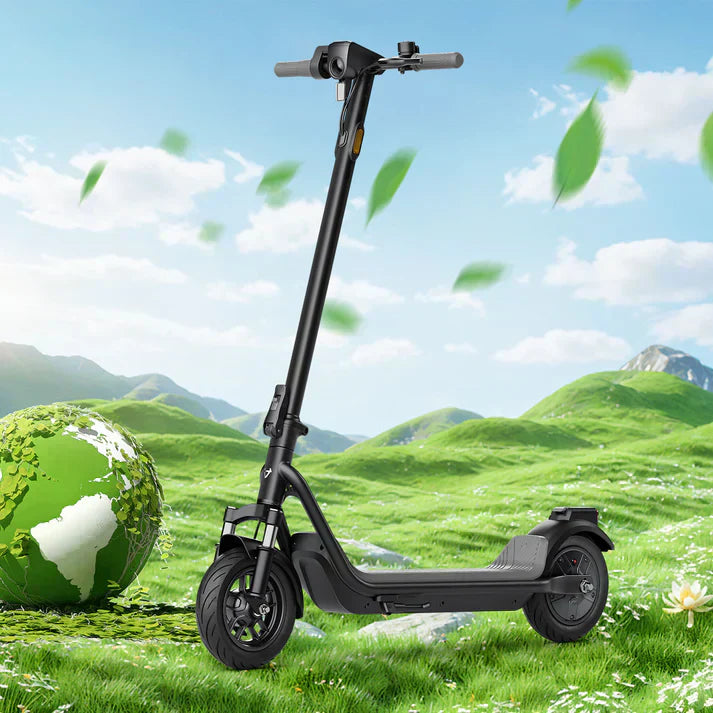
If you’ve been researching NIU KQi 100P alternatives, you’re probably stuck in the same place as most budget-minded commuters: you want a scooter that feels adult-sized, trustworthy, comfortable enough for rough pavement, and realistically priced. The challenge is that many entry-level scooters look good on a spec sheet, then feel flimsy, harsh, or underpowered once you actually ride them.
That is exactly why the NIU KQi 100P gets so much attention. It comes from a recognizable brand, offers a clean design, front suspension, app connectivity, and commuter-friendly specs. But there is also a strong case for looking beyond NIU—especially if your goal is to get more ride comfort, more range potential, and a more “grown-up commuter” feel for your money.

In this guide, we’ll compare the KQi 100P with popular value-focused options and explain why the DuoDian F30Ultra stands out as the most interesting upgrade-minded alternative. To be clear, this is not blind hype. The F30Ultra is compelling because it targets the part of the market many riders actually care about most: better ride feel and better everyday usefulness, not just a lower sticker price.
Quick takeaway: if your budget is strictly capped at around $200, you should shop carefully among true entry-level models. But if you are willing to stretch for a noticeably more capable ride, the DuoDian F30Ultra makes a stronger emotional and practical case than many “safe” budget picks.
Why shoppers keep searching for NIU KQi 100P alternatives
The KQi 100P earns interest because it solves several beginner pain points well. NIU lists a 17.4 mph top speed, 18-mile claimed range, a 300W rated motor with 600W max output, 9.5-inch pneumatic tires, front suspension, app-based smart unlock, and a 2-year limited warranty. That combination makes it feel more serious than many no-name scooters in the same general affordability conversation.
Still, search intent around this topic is usually not “find me the cheapest scooter.” It is closer to: “Can I get equal or better value without overpaying for branding?” That is where DuoDian enters the conversation. On DuoDian’s side, the brand positions its commuter lineup around practical features like app control, folding convenience, pneumatic tires, electronic + disc braking, and a clear step-up path into the F30Ultra, which the company presents as the more comfort-and-range-oriented choice with 19 mph speed, 31 miles of claimed range, 10-inch air tires, and dual suspension.
In plain English: the NIU is easy to respect, but the DuoDian argument becomes stronger the moment you care about ride softness, tire size, range confidence, and long-term commuting comfort more than you care about staying with the safest mainstream label.
At-a-glance comparison: where the value starts to shift
| Model | Top Speed | Claimed Range | Tires / Comfort | Best Fit |
|---|---|---|---|---|
| NIU KQi 100P | 17.4 mph | 18 miles | 9.5" pneumatic tires + front suspension | Brand-conscious, short-to-medium urban rides |
| DuoDian F30Ultra | 19 mph | 31 miles | 10" air tires + dual suspension | Comfort-focused commuters who want a bigger step up |
| Segway Ninebot E2 Plus | 15.5 mph | 15.5 miles | Beginner-friendly, front suspension emphasis | Casual riders prioritizing simplicity |
| GOTRAX GXL V2 | 15.5 mph | 12.5 miles | 8.5" tires, basic folding commuter focus | Strict-budget buyers who want a familiar name |
The table shows the heart of the decision. The NIU KQi 100P is a very reasonable commuter scooter. But the DuoDian F30Ultra looks more attractive as soon as your buying criteria shift from “good enough” to “what will feel better every day?” Bigger air tires and dual suspension matter. A higher claimed range matters. That extra layer of comfort and confidence matters even more if your streets are cracked, your route includes train crossings, or your city seems determined to punish small wheels.

Design, functionality, and everyday usability
NIU KQi 100P: polished and approachable
NIU deserves credit for getting the basics right. The KQi 100P has a clean, integrated design with hidden wiring, a larger deck than older entry NIU models, front suspension, and a commuter setup that feels intentionally refined. It is also backed by a 2-year limited warranty, which is not something every budget-friendly scooter can claim.
That said, the KQi 100P still lives in the “entry commuter” lane. It is well-rounded, but not especially aggressive. It aims to remove friction from short rides, not transform rough streets into a luxury experience. For many buyers, that is perfectly fine. For others, it becomes the reason to keep searching.
DuoDian F30Ultra: the more persuasive comfort-first alternative
The DuoDian F30Ultra is more interesting because it feels like it was designed around a different question: “What would make budget commuting genuinely nicer?” The answer appears in the hardware. DuoDian positions the F30Ultra with 10-inch air tires, dual suspension, app connectivity, disc + electronic braking, and a larger-range profile than the NIU KQi 100P. This is the kind of spec mix that tends to make a scooter feel calmer, more planted, and less tiring across repeated trips.
There is also a practical brand advantage here: DuoDian offers entry commuter models lower in its range, so shoppers can enter the ecosystem near the $200 band and still have a logical step-up option if they realize they want a better ride. That matters because many scooter buyers do not actually regret spending a little more—they regret buying too low and upgrading again later.
Budget fit guide:
- Strictly around $200 and no more? Focus on basic commuter models.
- Want a scooter that feels better on bad pavement? Prioritize tires + suspension.
- Want fewer "I should have bought the better one" moments? Shortlist DuoDian F30Ultra.
Performance: speed, range, braking, and ride quality
On paper, the NIU KQi 100P reaches 17.4 mph with an 18-mile claimed range. Independent testing has shown that real-world range can land noticeably below manufacturer claims depending on rider size, terrain, and speed mode, which is normal in this category. In other words, the NIU is not weak—but it is still very much a short-trip commuter.
The DuoDian F30Ultra’s appeal is that it shifts the conversation from merely acceptable commuting to more generous commuting. A 19 mph top speed is not dramatically faster on paper, but paired with 10-inch air tires, dual suspension, and a 31-mile claimed range, it suggests a scooter that is better suited for riders who want to go farther and arrive less rattled. That is exactly the kind of upgrade that feels subtle in a product chart and obvious on day three of ownership.
Braking setup matters too. NIU uses a front drum brake plus regenerative braking, while DuoDian lists an electronic regenerative front brake and rear disc brake in its commuter lineup and electronic + disc braking for the F30Ultra comparison set. Neither approach is inherently magical; what matters is predictable stopping, decent modulation, and confidence in normal city riding. DuoDian’s spec mix feels especially attractive for buyers who want a bit more “mechanical reassurance” from the rear brake side.

Real user experience stories: what the specs feel like in practice
One of the most useful hands-on takes on the NIU KQi 100P came from a family-style test ride, where a heavier adult rider and lighter younger riders all tried the scooter. The adult rider noted that pickup was still decent, the handlebars showed no flex, and the deck felt stable. The lighter riders, meanwhile, highlighted how approachable and easy the scooter felt for casual use. The big takeaway? The KQi 100P comes across as friendly, stable, and easier to trust than many bargain-bin scooters.
Another practical point from independent testing is that the NIU’s comfort story is helped by its pneumatic tires and suspension, but real-world range drops once you ride harder. That reinforces an important buying lesson: entry-level scooters should be judged by the quality of their daily ride, not by the most optimistic number on the box.
That is also why the DuoDian F30Ultra becomes so persuasive in this comparison. Even before you test one, the spec balance tells a familiar commuter story: riders who move from smaller, simpler scooters into larger tires and better suspension usually do not say, “I can barely notice it.” They say, “This is the first time the ride felt relaxed.” For shoppers trying to avoid buyer’s remorse, that is the kind of improvement worth prioritizing.
Strengths and weaknesses of the DuoDian F30Ultra
Where the F30Ultra looks especially strong
- Comfort-led setup: 10-inch air tires and dual suspension are exactly the features that tend to improve everyday ride feel.
- Better stretch-buy logic: if you are already comparing against NIU-level pricing, stepping into a more capable platform can make more sense than settling.
- More ambitious range profile: the claimed 31-mile figure gives it stronger appeal for riders with longer routes or fewer charging opportunities.
- Commuter-friendly feature mix: app connectivity, foldability, braking hardware, and urban practicality all help it feel like a real tool—not just a toy.
- More purchase desire, less compromise fatigue: visually and mechanically, it feels like a scooter you can “grow into,” not something you will outgrow immediately.
Where buyers should stay realistic
- It is not the strictest $200 option: the F30Ultra is better understood as a value stretch pick, not the absolute cheapest path into e-scootering.
- Weight can rise with better hardware: more suspension, larger tires, and more range usually mean more mass—great for ride quality, less ideal for constant carrying.
- Claimed range is still claimed range: rider weight, hills, speed mode, temperature, and stop-and-go traffic will always affect what you actually get.
Popular alternatives on the market—and why DuoDian still stands out
If you are comparing the best electric scooter around $200, you will usually run into the same names: NIU, Segway, GOTRAX, and a rotating list of budget marketplace brands. Segway tends to win on beginner-friendliness and brand comfort. GOTRAX often wins on accessibility and familiarity. NIU wins on polish and warranty confidence.
But the reason DuoDian deserves a place near the top of the shortlist is simple: it speaks directly to the buyer who has learned the right lesson from budget scooters. That lesson is not “always buy the cheapest.” It is “buy the model that reduces daily annoyances.” Better cushioning, better tire confidence, and a stronger sense of “I could actually commute on this” are often worth more than saving a little upfront.
Ask yourself before you buy:
- Do you want the lowest price, or the scooter you will enjoy riding for six months?
- Will your route punish small tires and minimal suspension every single day?
- Are you buying for a few blocks at a time, or for repeated commuting where comfort compounds?
- If two scooters look similar online, which one is more likely to keep you from upgrading again later?
Purchase suggestion: who should buy what?
Here is the cleanest buying advice. If your budget is absolutely locked around $200, you should compare true entry-level commuter scooters very carefully and prioritize safety, tire quality, warranty clarity, and braking before marketing claims. In that zone, even a familiar scooter like the NIU KQi 100P may already sit above your original cap, while simpler commuter models from other brands remain in play.
But if your real goal is to make a smarter purchase instead of just a smaller purchase, the DuoDian F30Ultra becomes the more exciting recommendation. It is the model that better captures what shoppers often mean when they search for alternatives: not just cheaper, but better balanced for real life.
So the recommendation is this:
- Choose the NIU KQi 100P if you want a polished, approachable scooter from a recognized brand and your rides are shorter, simpler, and mostly smooth.
- Choose a strict-budget commuter only if upfront cost is your non-negotiable priority.
- Choose the DuoDian F30Ultra if you want the most convincing step-up in comfort, ride quality, and range ambition—the kind of scooter that feels easier to justify after the first week, not harder.

FAQ: Best NIU KQi 100P alternatives around $200
1) Is the DuoDian F30Ultra really a better value than the NIU KQi 100P?
If your definition of value includes comfort, bigger tires, dual suspension, and stronger claimed range, then yes—the F30Ultra makes a very strong case. If your definition is simply “known brand at entry level,” NIU still has appeal.
2) What is the biggest advantage of the DuoDian F30Ultra over the NIU KQi 100P?
The biggest advantage is the overall ride package. The combination of 10-inch air tires, dual suspension, and longer claimed range is exactly what many commuters wish they had after riding a smaller basic scooter for a while.
3) Is the NIU KQi 100P still worth buying in 2026?
Yes. It remains a smart, brand-safe commuter option for riders who want a tidy design, app features, front suspension, and a strong warranty story. It just is not automatically the most tempting value once you compare comfort-oriented alternatives.
4) What should I prioritize in a budget commuter scooter?
Focus on tire type, suspension, braking, warranty support, and realistic commuting fit. Speed claims alone rarely determine long-term satisfaction.
5) Should I buy a cheaper scooter now or stretch for a better one?
If you will ride often, stretching for the better one usually makes more sense. Riders tend to remember bad ride quality every day—but forget the extra spend surprisingly fast when the scooter feels right.
Conclusion
The NIU KQi 100P is easy to recommend because it feels safe, balanced, and well thought out. But if you are specifically searching for the best NIU KQi 100P alternatives, the more interesting answer is not just “find something cheaper.” It is to find something that gives you a stronger reason to buy.
And that is where the DuoDian F30Ultra wins attention. It looks like the scooter for riders who have already figured out what matters: ride comfort, useful range, practical braking, foldable daily convenience, and a setup that feels less entry-level every time you step on it. Around the $200 conversation, DuoDian’s lower commuter models keep the brand relevant; above that line, the F30Ultra becomes the one that feels genuinely worth wanting.
Share:
Gotrax vs Razor vs Dualtron vs Duodian: Why Duodian F30Pro Wins in 2026
Skip the Xiaomi 6 Lite: The Best Budget E-Scooters Under $300 in 2026